Searching For and Characterizing the Migdal effect in a Gaseous Optical Time Projection Chamber
- Nuclear, Particle, Astroparticle and Cosmology (NUPAC) Seminars
November 3, 2026 2:00 PM
PAIS 3205
- Host:
- Dinesh Loomba
- Presenter:
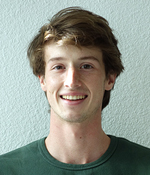
- Wesley Thompson (UNM)
The MIGDAL Collaboration aims to directly observe the Migdal effect and measure its cross section in an optical gas time projection chamber (O-TPC), both to test theoretical predictions and to validate its use in light dark matter searches. This task is challenging due to the overlapping nature of the electron recoil (ER) and orders-of-magnitude brighter nuclear recoil (NR) tracks attributable to the Migdal signal.
This talk will focus on our analysis of data from the second science run, highlighting the deep-learning techniques deployed in the rare event search. We use two real-data trained YOLOv8-based object-detection models, one for each of the MIGDAL O-TPC’s imaging detector subsystems. These YOLO models simultaneously classify and localize faint ERs and bright NRs, including those that are highly overlapping. We also use a standard U-net model in our charge readout to classify each pixel as belonging to an NR or ER class. This technique is critical for background rejection, as will be shown in the talk.
Finally, we present tests of Overlap Aware Segmentation of ImageS (OASIS), a novel machine learning framework designed for the pixel-wise intensity decomposition of overlapping ER–NR pairs. OASIS has previously been shown to enable the accurate reconstruction of energies and recoil directions of simulated ERs overlapping real NRs in energy regimes crucial for measuring the Migdal spectrum. Here, we test OASIS on events in which both the ER and the NR are obtained from real data, using ERs of known energy (5.9 keV) from an ⁵⁵Fe source. These tests quantify OASIS performance on real overlapping events, a necessary step before applying it to Migdal candidates in data. If time allows, we will also discuss applications of OASIS to gravitational lensing.