Search for Neutrinoless Double Beta Decay with LEGEND Using Simulation and Machine Learning
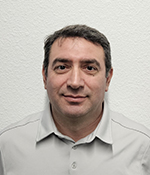
- Nuclear, Particle, Astroparticle and Cosmology (NUPAC) Seminars
May 5, 2026 2:00 PM
PAIS 3205
- Host:
- Michael Gold
- Presenter:
- Zafer Acar (UNM)
May 5, 2026 2:00 PM
PAIS 3205
Pushing the Limits of Radial Velocity Exoplanet Science with NEID and NETS
Arvind Gupta (University of Arizona)
CART Astrophysics Seminar Series
Sep. 24, 2:00 PM
- Sep. 24, 3:00 PM
PAIS 3205
Epitaxial layer transfer for high-performance photonics
Prof. Garrett Cole (Univ of Arizona)
Physics and Astronomy Colloquium
Sep. 25, 3:30 PM
- Sep. 25, 4:30 PM
PAIS 1100
Uncertainty quantification for many-body physics: from light nuclei to neutron stars
Ryan Curry (LANL)
Nuclear, Particle, Astroparticle and Cosmology (NUPAC) Seminars
Sep. 29, 2:00 PM
PAIS 3205
Pulsar Cyclic Spectroscopy as a Probe of the Interstellar Medium
Jacob E. Turner (Greenbank/Cornell)
CART Astrophysics Seminar Series
Oct. 1, 2:00 PM
- Oct. 1, 3:00 PM
PAIS 3205
Measurement of the CP-Violation Parameters Γ_s, ΔΓ_s and φ_s as a Probe of New Physics via the B_s^0 → J/ψ φ Channel using the ATLAS Detector, and Development of Technologies for a New Measurement at the Future Circular Collider
Saheed Oyeniran (UNM)
Nuclear, Particle, Astroparticle and Cosmology (NUPAC) Seminars
Oct. 6, 2:00 PM
PAIS 3205

© The University of New Mexico
Albuquerque, NM 87131, (505) 277-0111
New Mexico's Flagship University